
Loading Experience
Linked Patient Learning
Loading Experience
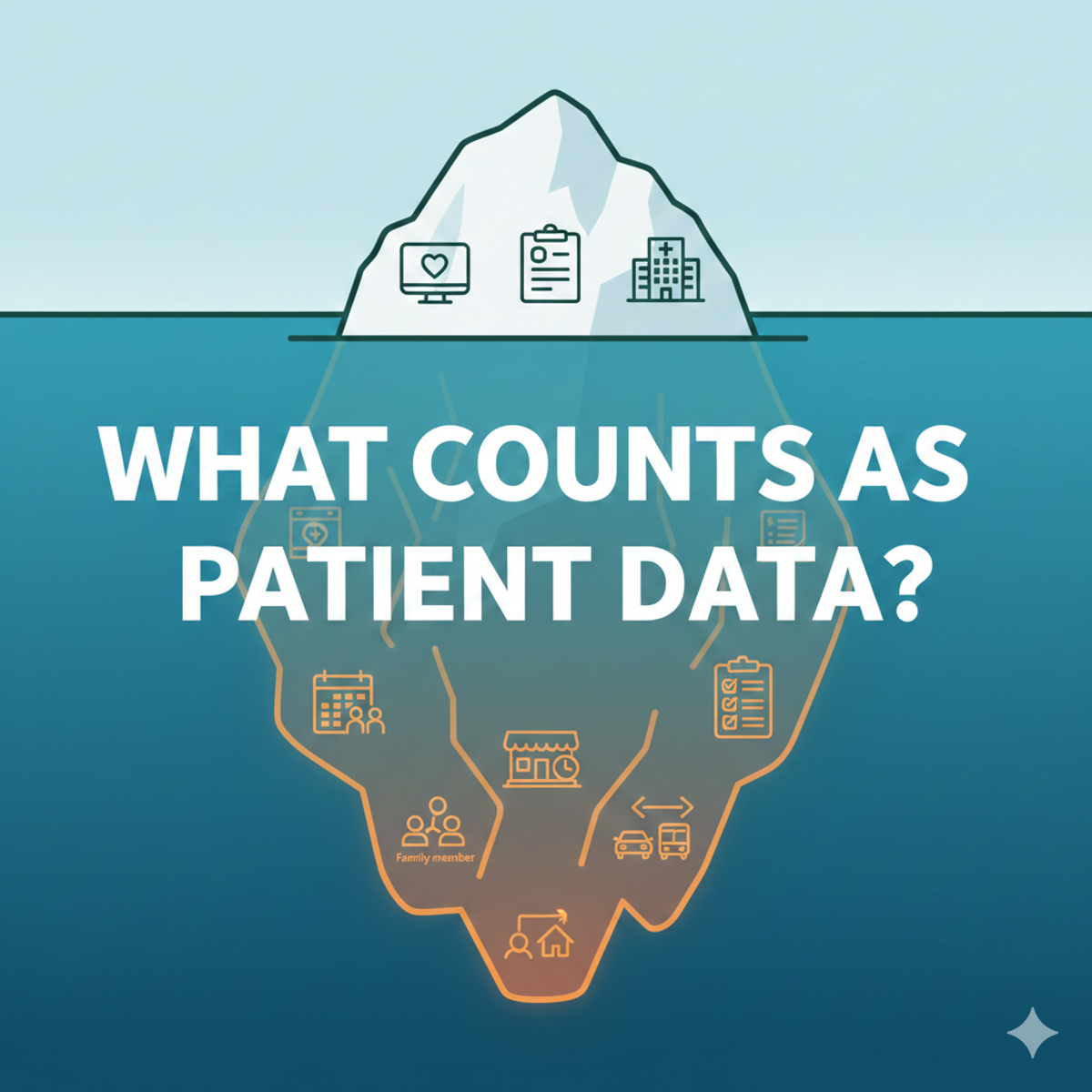
At 2 AM, it’s not the technology roadmap keeping you awake. It’s the numbers. Treatment uptake remains stubbornly low. Patients who should engage, don’t. Your AI-powered outreach generates reports but not results.
I just reada Fortune articlerevealing that 95% of enterprise AI pilots delivered zero ROI in 2024. The culprit? Companies were optimizing the wrong layer—building sophisticated models on infrastructure that could only process 30% of their data because processing everything would blow their compute budgets.
Healthcare’s AI challenge looks different on the surface, but here’s what we’re missing:We’re not drowning in data we can’t process.
We’re starving our AI by defining patient data too narrowly.
The Wrong Question
While research from Gartner, Deloitte, and McKinsey shows that 70% or more of AI project failures are linked directly to data problemsTurningdataintowisdom, healthcare keeps asking: “How do we get better data quality?”
The better question is: “What aren’t we counting as data in the first place?”
Half of all patients don’t take medications as prescribed, leading to approximately 125,000 avoidable deaths annually and over $100 billion in preventable healthcare costsPharmacy TimesPubMed CentralFrontiers.
The problem isn’t that our AI is processing bad data. It’s that we’re not feeding it the data that actually predicts behavior.
What You Might Be Missing
Social determinants potentially drive more than 80% of health outcomes in a population, with medical care only estimated to account for 10-20% of modifiable contributorsPubMed Central. But even when we “address SDOH,” we’re typically screening for static factors: Does the patient have housing? Transportation? Food security?
What if the most predictive data isn’t static demographics—its dynamic ecosystem patterns sitting in systems you never thought to integrate?
Consider what you might discover:
Relational Data:Your scheduling system shows May always books appointments when her daughter is available. Your AI sends reminders on Tuesdays but doesn’t know her daughter—who translates—works Tuesday-Thursday. The adherence algorithm is optimizing send times based on population averages, blind to the only pattern that matters- when May’s interpreter is available.
Logistical Data:Your pharmacy partner just changed weekend hours. Your refill reminder AI doesn’t know this. James gets his prompt Saturday morning as usual, arrives at a closed pharmacy, and falls out of his routine. Three systems have this information—your pharmacy network data, your vendor’s logistics system, your community resource database—but none talk to your engagement AI.
Temporal Pattern Data:Your care team celebrates when patients attend their quarterly check-ups. But the real signal isn’t appointment attendance—it’s the 48-hour window afterward. That’s when patients are most motivated, most confused, and most likely to either solidify new habits or abandon them entirely. Your AI sends generic “great job” messages instead of intensive support when the window is open.
The Infrastructure You Need
The Fortune article describes enterprises processing only 30% of their data because their infrastructure couldn’t scale. Healthcare may have a different problem: we’ve built infrastructure around the data we collect, without questioning whether we’re collecting the data that matters most.
Before you invest in the next AI model, try this:
Audit your unconsidered data sources.Map three categories:
Which systems capture WHO is in your patients’ ecosystems and WHEN they’re available?
Which systems track HOW the services around your patients actually operate in real-time?
Which systems reveal WHEN patients are in windows of high motivation or high vulnerability?
Start with one integration you’ve never considered.ScienceDirect. The difference? They treated social context as primary data, not supplementary screening.
The Question That Matters
Your AI isn’t failing because it can’t process your data well enough. It’s failing because you’re asking it to predict ecosystem-driven behaviors with individual-level inputs.
The infrastructure blind spot isn’t technical. It’s conceptual. And it’s solvable—but only if we’re willing to expand our definition of what counts as patient data in the first place.
What’s your take? What data are you not counting as “patient data” today?
#HealthcareAI #MedicationAdherence#ValueBasedCare #HealthSystems #PharmaInnovation #AIin
Written by
Liza Prettypaul-Lodhia
Share your details and we'll send you the playbook.