Patent-Pending 90/10 Gap Finder: Free 3-Min DiagnosticFree 3-Min 90/10 Assessment
Take AssessmentAssess NowThe 90/10 Frameworkfor Patient Engagement
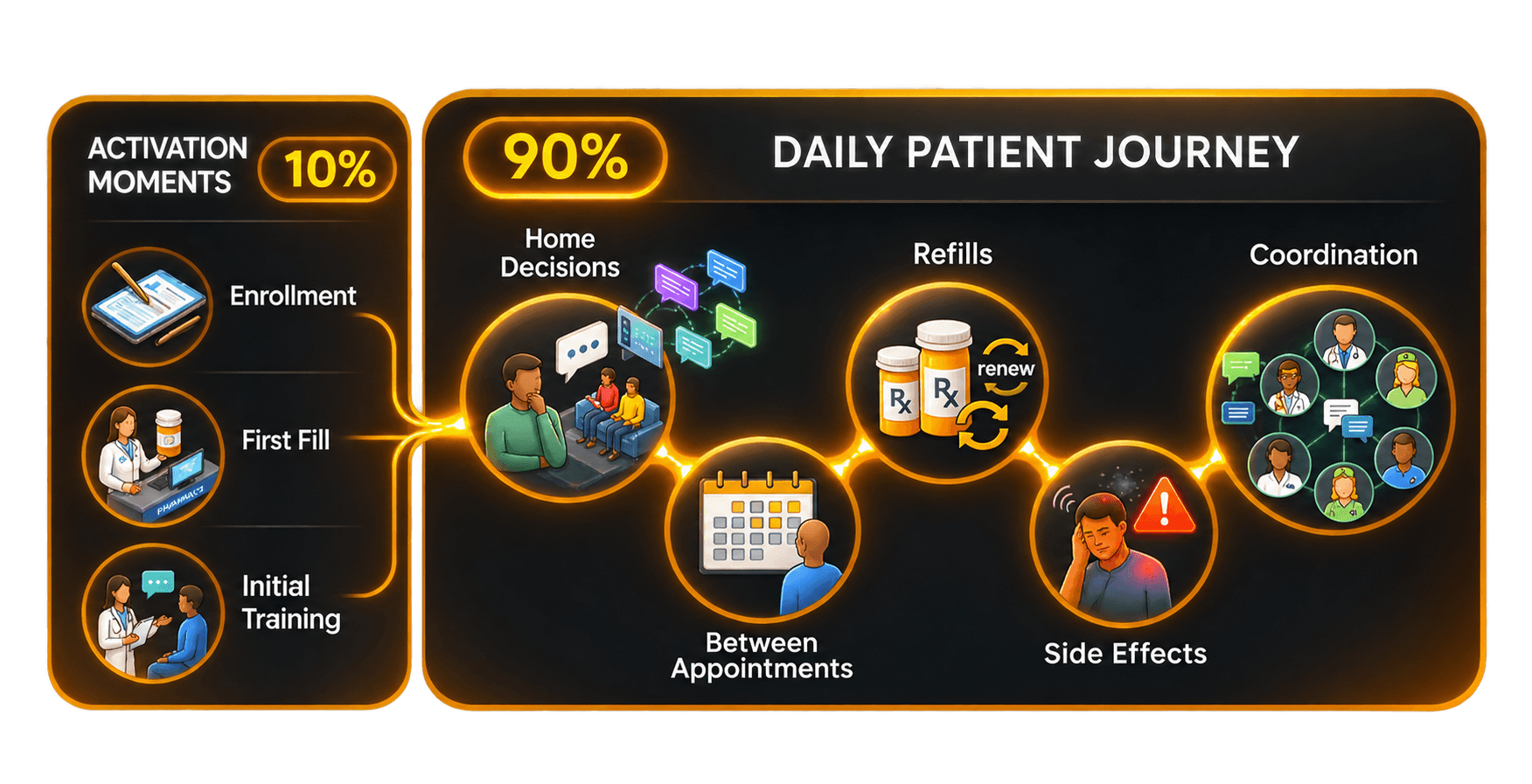
Most pharma invests 90% of budget optimizing the 10% of patient journey. Build infrastructure for the 90% where persistence is determined. Our patent-pending Gap Finder shows you where to start.
Recognitions & Certifications


What Industry Leaders Say
"Liza architected a national rare disease patient awareness program, leading community engagements across 30+ markets. Her efforts directly led to patients identifying themselves as at risk — and she laid the groundwork for sustainable program infrastructure that followed."
Alissa Roldan
VP, Amyloidosis Lead, Pfizer
"Liza has demonstrated an unwavering commitment to patients and impact across 22 years. Driving positive change everywhere she goes."
Portfolio Marketing Lead, Immunoglobulin
Top Biopharma
"I was impressed with Liza in every interaction. Her ripple effect continues — her name came up in a conversation with a leader doing health equity work in oncology, who gave her rave reviews for the lasting impact she had on teams."
VP, Patient Solutions Oncology
Top Biopharma
Why Traditional Patient Engagement Fails

Biopharma excels at activating patients - getting them enrolled, prescribed, and started on therapy. These activation moments represent roughly 10% of the patient journey.
But the other 90%? That happens at home. Between appointments. When patients make daily decisions about refills, struggle with side effects, face insurance barriers, or simply wonder if treatment is still worth it.
That's where persistence is determined. And most pharma infrastructure doesn't touch it.
Understanding the 90/10 Framework
Activation
What pharma optimizes today
Sustained Support
Where persistence is determined
Key Insight
The 90% doesn't happen in your hub, your HCP's office, or your patient portal. It happens in patients' real lives - and most pharma infrastructure has no visibility into it.
Where the 90% Breaks Down
Common patient scenarios that expose the infrastructure gaps
The Handoff Failure
Sarah's neurologist starts her on a new therapy and sends a referral to the specialty pharmacy. It arrives missing her insurance details. The pharmacy waits on the clinic, the clinic assumes the pharmacy has what it needs, and no one tells Sarah. Two weeks later, she still hasn't started therapy, and no one owns the gap.
An estimated 80% of serious medical errors involve miscommunication when responsibility for patients is handed off between caregivers.
Source: The Joint Commission Center for Transforming HealthcareThe Invisible Struggle
Marcus has been stable on his therapy for a year. Then his insurer requires a new prior authorization to continue. The paperwork stalls between his doctor's office and the health plan, his refill is held, and he goes three weeks without medication. By the time approval comes through, he has decided the hassle isn't worth it. His hub sees a closed case, not a patient lost.
94% of physicians say prior authorization delays patients' access to necessary care, and 78% say it can lead patients to abandon a recommended course of treatment.
Source: American Medical Association, 2024 Prior Authorization Physician SurveyThe Data Blindness
Your dashboard shows 1,000 new prescriptions this quarter and strong enrollment numbers. What it doesn't show: about 250 of those patients never filled their first prescription, and no one on your team knows who they are or why.
About 1 in 4 new prescriptions are never filled.
Source: Fischer et al., Journal of General Internal Medicine, 2010Three Questions That Expose Your 90/10 Gap
Question 1
Can you answer what happened to patients who enrolled but never filled?
Not just 'they didn't fill'—which specific handoff in the 90% failed?
About 1 in 4 new prescriptions are never filled.
Source: Fischer et al., Journal of General Internal Medicine, 2010Real-time visibility into handoff failures
Question 2
Can you intervene before discontinuation?
Or is your first signal 'patient hasn't filled in 60 days'?
78% of physicians say prior authorization can lead patients to abandon a recommended course of treatment.
Source: American Medical Association, 2024 Prior Authorization Physician SurveyPredictive analytics for at-risk patients
Question 3
Can you test what works in the 90%?
Or does 'testing' mean adding another vendor with another data silo?
An estimated 80% of serious medical errors involve miscommunication when responsibility for patients is handed off between caregivers.
Source: The Joint Commission Center for Transforming HealthcareUnified data infrastructure across the journey
Learn More About the 90/10 Framework
Featured insights from our blog


Ready to Close Your 90/10 Gap?
Let's build patient engagement infrastructure that addresses the full patient journey— not just the activation moments.